
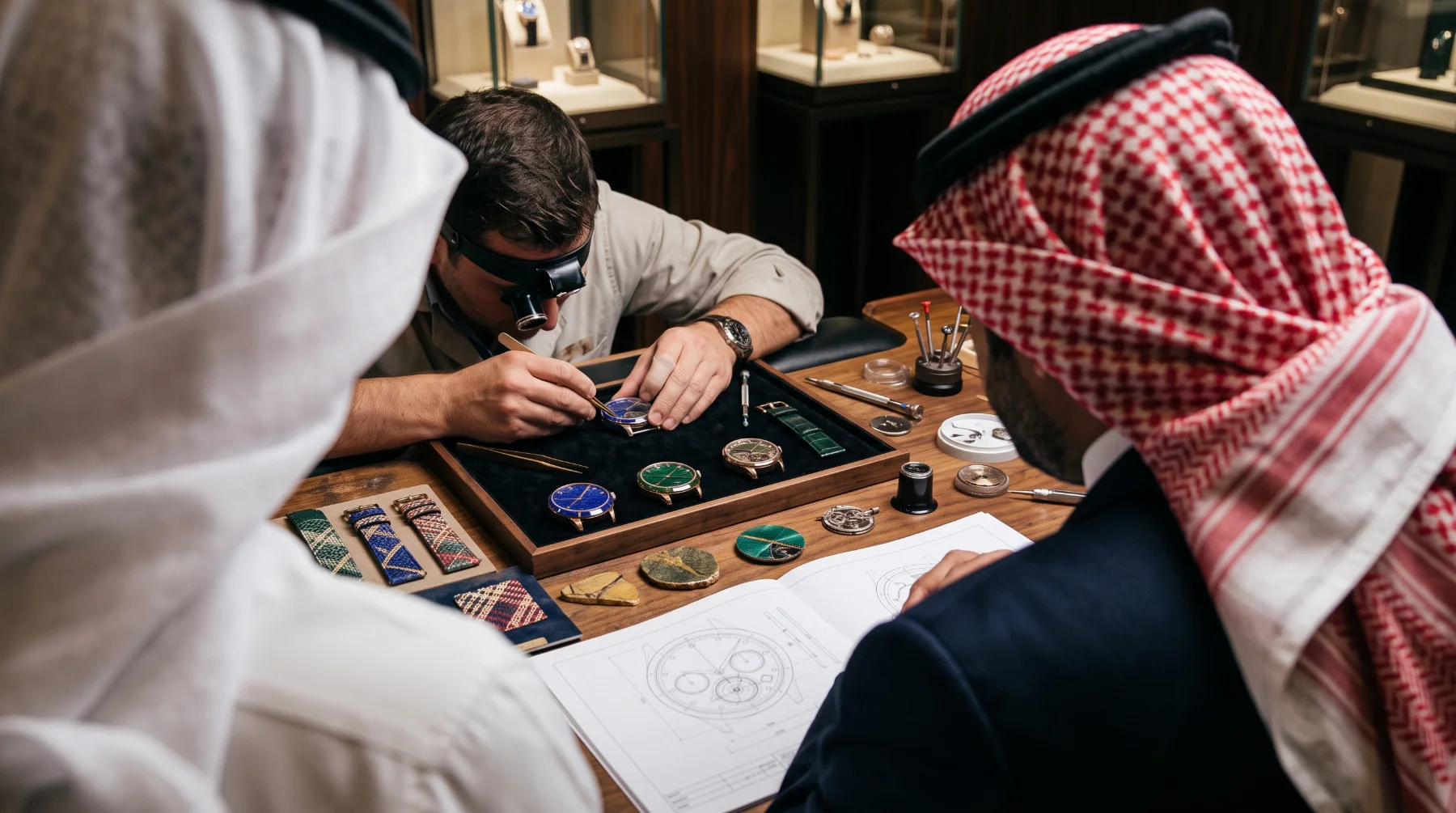
A buyer purchasing a used car for $20,000 can easily pull up its service records, accident reports, and number of previous owners. Yet, a collector buying a vintage or modern mechanical timepiece for $100,000 or $200,000 often cannot verify where it was serviced, which internal components were replaced, who owned it decades ago, or whether accompanying documents reflect its complete history.
This information gap is precisely what Dutch startup Worldwatch aims to bridge with its Worldwatch Register, launched on October 10 in conjunction with World Watch Day. The project's current scope requires clarification: in its present phase, the registry does not provide a complete historical log for every timepiece, nor does it authenticate watches directly. Instead, it has launched as a free public registry for verified professional watch dealers. The broader, long-term ambition, however, is to consolidate fragmented data points into a persistent chronological record that follows a watch across decades. The Problem Isn't a Lack of Data—It's Fragmentation
When a pre-owned luxury watch changes hands, it leaves fragments of its provenance scattered across disconnected silos. The dealer files purchase and sales invoices, the watchmaker logs service notes, the auction house archives an old catalog, the authentication service files an inspection report, and an online marketplace retains high-resolution listing photos from a past sale.
The core challenge is that these records rarely converge into a unified dossier.
Stan Duijn, founder of Worldwatch and a former watch dealer, describes the market as an archipelago of isolated islands: each stakeholder holds valuable data, but that institutional knowledge vanishes whenever a dealer retires, a workshop shuts down, or an owner misplaces paperwork. Consequently, a timepiece engineered to last for generations often reaches a new owner with a paper trail covering only a tiny fraction of its lifespan. What Does the Worldwatch Register Offer Today?
The platform's initial rollout is considerably more pragmatic than an all-encompassing "global watch registry." Currently, the Worldwatch Register functions as a free, searchable directory of verified professional watch dealers. Prospective buyers can review a business’s legal trading name, geographic location, founding year, verified website, and compliance status.
To join, dealers must establish a public profile, agree to a code of conduct, and clear an identity and business verification process with the Worldwatch team. The platform deliberately avoids subjective star ratings, paid algorithmic rankings, or customer reviews, and does not issue determinations on the authenticity of specific timepieces.
This distinction is critical: the initiative does not present itself as an alternative to independent horological experts, physical inspection services, or brand-backed Certified Pre-Owned (CPO) programs. Instead, it serves as an initial layer of baseline trust regarding the professional entities introducing inventory to the market. The Next Frontier: From Dealer Identity to Watch Provenance
The project's most ambitious phase begins beyond dealer verification.
Worldwatch aims to connect the milestones of a watch's operational life into an unbroken provenance chain: its primary retail sale, routine servicing, auction appearances, secondary-market transfers, and eventual enrollment in third-party authentication or certified pre-owned programs.
The operational model is straightforward: a timepiece sold by an authorized retailer in 1968, serviced by an independent watchmaker in 1985, hammered at an auction house in 2004, and listed by a verified dealer today no longer needs to carry separate, disconnected records. Each event can serve as a link in a single traceable ledger.
The registry does not require a comprehensive history from day one. Securing even one verified service record or transaction log adds tangible value over zero documentation. Over time, a watch's historical profile gains clarity with each verified interaction logged into the system. Watchmakers: The Critical Next Link
Following dealer onboarding, the platform is expanding to include watchmakers and specialized service centers. Worldwatch is actively consulting with professional horologists and trade bodies to determine the scope of technical information that workshops can disclose on public profiles, enabling collectors to assess a workshop's specialization and tooling before entrusting rare pieces to them.
This focus is essential because restoration work directly dictates collector value, particularly in vintage horology. Replacing an original dial, hands, or movement components—or executing an overly aggressive, unfaithful case polish—can significantly diminish a watch's valuation. Yet, detailed service documentation rarely accompanies a timepiece through subsequent secondary transactions.
By integrating service records into a watch’s traceable history, prospective buyers could eventually verify not merely that a piece was "serviced," but precisely when, by whom, and which components were preserved, replaced, or restored. Why "Box and Papers" Are No Longer Sufficient
Within the pre-owned watch market, the term "Box and Papers" has long served as the benchmark of reassurance. However, original documentation rarely tells the full story.
Guarantee papers may date back decades, while the watch underwent multiple unauthorized repairs, structural modifications, or owner transitions in the interim. A watch may retain its original period components, or it may contain replacement service parts installed decades later by official service centers or third-party workshops without surviving invoices.
Consequently, documented provenance carries immense commercial significance in rare and vintage horology—mirroring fine art and antiquities. A timepiece with verifiable, uninterrupted provenance commands higher liquidity and clarity than an identical reference accompanied solely by the verbal assurances of its current seller. Lessons Borrowed From the Automotive Sector
The analogy to the automotive market is foundational to the platform's architecture. Duijn, who previously worked at Tesla, emphasizes that automotive retail operates decades ahead of horology in terms of centralized inventory management, digital provenance, and standardized data exchange between market participants.
The paradox is stark: an automobile—a depreciating asset—typically maintains a transparent, VIN-linked history detailing ownership transfers, maintenance intervals, and collision repairs. Meanwhile, a high-complication mechanical watch can appreciate significantly and pass through multiple generations without any standardized international tracking framework.
Adapting this model to horology presents structural challenges, given the market's fragmentation across independent brands, gray-market dealers, private collectors, auction houses, and regional workshops, each holding proprietary pieces of the puzzle. Can a Single Platform Consolidate the Ecosystem?
Worldwatch does not propose rebuilding existing industry infrastructure from the ground up. Instead, its strategy focuses on integrating established repositories—including auction archives, independent authentication databases, and brand-managed CPO ecosystems.
This aggregator approach is significantly more practical than attempting to build a centralized registry from scratch. The company already provides inventory management systems to professional dealers, synchronizing stock across major luxury sales channels. In July 2026, Worldwatch re-engineered its infrastructure around a unified record for every individual timepiece inside a dealer's account, binding acquisition details, condition notes, and sale records to a single identifier.
If components of this private ledger can be securely and selectively surfaced to prospective buyers, a watch’s historical record could persist well beyond its tenure in any single dealer's vault. Navigating the Privacy Dilemma
Establishing an asset lifecycle log cannot come at the expense of client confidentiality. High-end mechanical watches represent substantial financial assets, and high-net-worth collectors routinely require complete transaction anonymity.
The project addresses this by making the public disclosure of ownership records entirely opt-in. A milestone in a timepiece’s lifecycle can be cryptographically verified and recorded without disclosing the identity of the private collector—analogous to how major auction houses catalog provenance as originating from a "prestigious private collection."
Striking the right balance between operational transparency and owner privacy remains a central challenge: the registry gains utility through granular data, but loses industry adoption if collectors fear that transactions will become public knowledge. A Registry Cannot Authenticate by Itself
The existence of a recorded history does not inherently guarantee physical authenticity. The current registry validates the credentials of businesses, not individual watches; physical inspection reports from accredited third parties would simply attach as secondary documentation within an asset's profile.
This distinction is vital: a counterfeit watch could theoretically generate a digital footprint if populated with fraudulent or unvetted claims, unless every entry in the chain links directly to a vetted, accountable institution. Consequently, the commercial value of any provenance ledger rests entirely on the integrity of the entities authorized to append data, rather than the technology of the database itself. Reshaping Secondary-Market Valuation
Should this infrastructure achieve broad adoption, it could fundamentally transform how pre-owned luxury watches are appraised and traded.
Rather than relying on generic dealer descriptions citing "mint condition" and "full set," buyers would evaluate a verifiable chronological dossier: initial point of sale, detailed service logs, past catalog listings, authentication certificates, and documented component modifications.
Under this paradigm, verifiable provenance becomes a primary valuation vector on par with reference number, condition, and rarity. Two identical references in comparable cosmetic condition will no longer trade at parity if one retains decades of documented history while the other enters the market as a complete unknown.
If Worldwatch successfully transitions from verifying merchants to documenting the lifecycles of individual timepieces, it will provide the secondary watch market with what it has historically lacked: persistent, institutional memory.
Comments
No comments yet.